What Makes a Tooth Fracture a Dental Emergency?
A cracked or broken tooth can look minor and still turn serious fast. Some fractures are little more than a cosmetic nuisance. Others expose the nerve, destabilize the tooth, or create an open path for bacteria to reach deep tissues. The difference matters, because timing often determines whether a dentist can save the tooth with a conservative repair or whether treatment becomes more invasive, more expensive, and more uncomfortable.
People often assume a tooth fracture counts as a Dental Emergency only when there is dramatic bleeding or a piece of the tooth falls out in public. In practice, the threshold is broader than that. A fracture becomes urgent when it threatens the tooth’s survival, causes significant pain, affects your bite, or raises the risk of infection. I have seen patients walk in with a hairline crack and severe nerve pain, while others arrive holding half a molar in a napkin with surprisingly little discomfort. Pain level alone does not tell the whole story.
The challenge is that teeth do not heal the way skin or bone does. Enamel cannot regenerate. Dentin does not grow back to seal a split on its own. Once a tooth is fractured, the best outcome depends on quick assessment, controlling further damage, and choosing the right repair before everyday forces from chewing turn a repairable crack into a split tooth.
Not every fracture is an emergency, but every fracture deserves respect
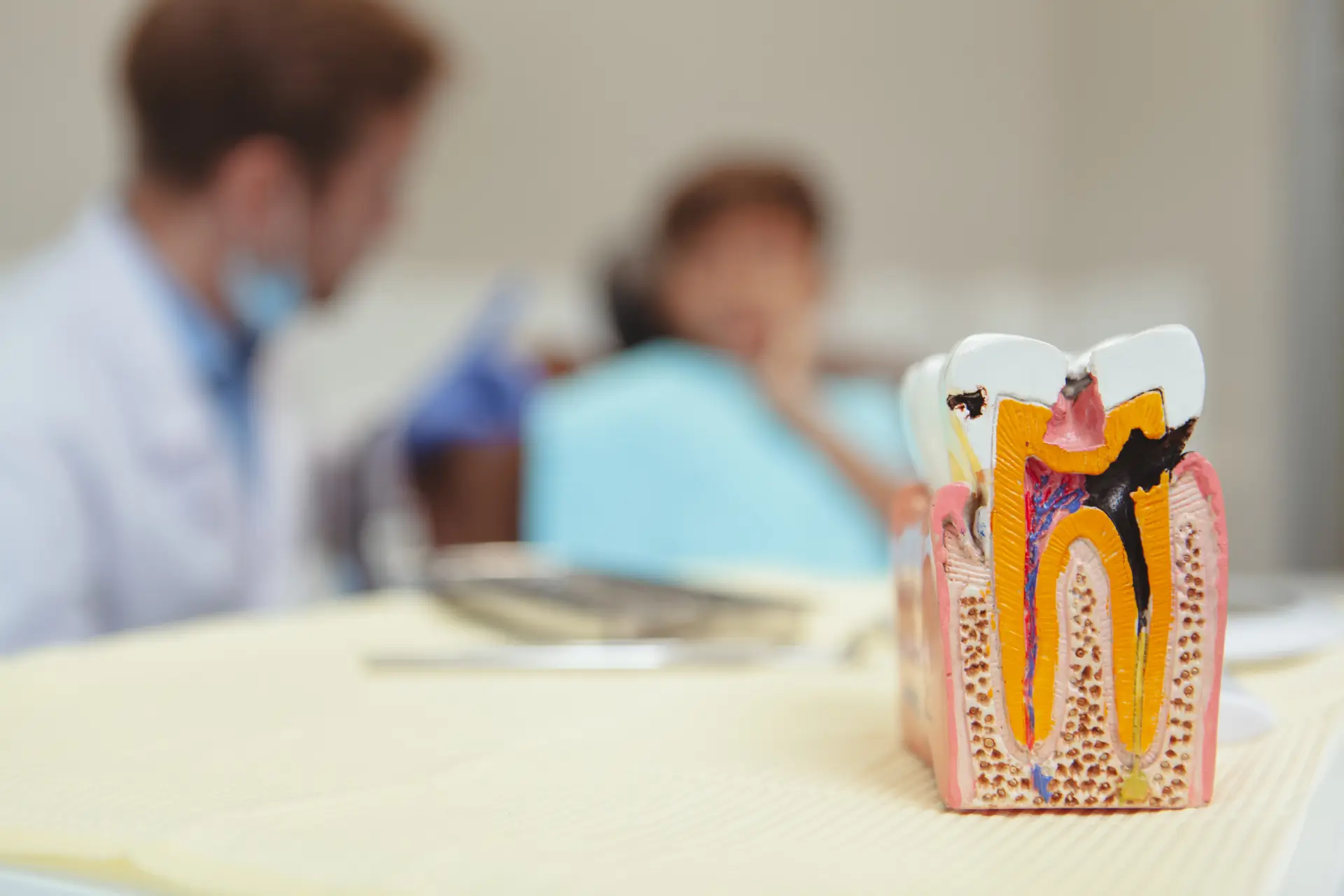
A tooth can fracture in several ways. It might chip at the edge, develop a craze line in the enamel, break through a filling, split from the chewing surface toward the root, or crack beneath the gumline where the problem vitalitydentaldfw.com Dental Emergency is harder to detect and harder to treat. The severity depends on depth, direction, symptoms, and whether the fracture reaches the pulp, which is the living center containing the nerve and blood supply.
Small enamel chips are common. Someone bites ice, catches a fork, or grinds at night and loses a tiny corner. If there is no pain, no sharp edge cutting the tongue, and no change in bite, that may not require same-day care. It still needs evaluation, because what looks like a simple chip can hide a longer crack, but it is not usually the kind of Dental Emergency that calls for immediate after-hours treatment.
At the other end of the spectrum is the tooth that fractures vertically into the root, or breaks in a way that leaves the nerve exposed. Those cases can deteriorate within hours or days. Once bacteria enter the pulp, inflammation builds pressure inside a rigid space. That is why some cracked teeth create throbbing pain that seems out of proportion to what is visible in the mirror. If the crack extends deep enough, the tooth may no longer be restorable with a filling or crown and may need root canal treatment, surgery, or extraction.
The practical question is not simply, “Is it broken?” It is, “What is the fracture likely to do next if I wait?”
The signs that push a fracture into emergency territory
Certain features make a fractured tooth urgent even before an X-ray or exam confirms the full extent of the damage. The most important are uncontrolled pain, swelling, bleeding that does not stop, exposed inner tooth structure, and any disruption that makes normal biting feel unstable.
A dentist starts thinking in terms of urgency when a patient reports sharp pain with biting and release, sensitivity that lingers after cold, spontaneous throbbing, or the feeling that the tooth has shifted out of position. Those symptoms suggest more than a superficial chip. They often point to a fracture moving under pressure, pulpal inflammation, or damage extending below the enamel.
Swelling changes the picture as well. A fractured tooth combined with swollen gum, facial fullness, a bad taste, or pus-like drainage may mean bacteria have already reached the pulp or surrounding bone. That is not something to watch for a week and hope it settles down. Infection near the root can progress quickly, especially if the tooth was already heavily filled, previously cracked, or had untreated decay.
Another red flag is when part of the tooth breaks off and leaves a pink, red, or dark central area visible. Patients sometimes describe seeing “the inside” of the tooth. That can indicate the pulp is exposed or nearly exposed. In those situations, time matters because the chance of preserving the tooth with less invasive treatment declines as contamination and inflammation increase.
Even a fracture without much pain can become urgent if the remaining tooth structure is unstable. A back molar that has lost one cusp may still function for a few hours, but each meal risks splitting the rest of the crown. I have seen teeth that could have been protected with a crown on Monday end up requiring extraction by Friday after the patient kept chewing on them.
How dentists judge the severity
Fractures are not all visible on a single X-ray, which is one reason self-diagnosis is unreliable. Dentists rely on several clues at once: where the tooth hurts, whether it hurts when biting down or releasing, how the fracture line behaves under magnification, whether light passes through the crack, how loose the broken segment is, and whether the pulp is still responding normally.
A front tooth chip tends to be easier to assess visually. A molar crack is often more deceptive because the strongest chewing forces hit the back teeth and because fillings can mask structural damage. Teeth with large old restorations are especially vulnerable. The remaining natural tooth walls may be thin, and when one wall finally gives way, the break can run deeper than expected.
Dentists also look at where the fracture sits relative to the gumline. A break entirely above the gum is usually easier to restore. A break extending below the gumline can violate the biologic space the gum and bone need to attach properly. Once that happens, saving the tooth may require crown lengthening, orthodontic extrusion, or extraction if the fracture extends too far down the root.
Pulp status matters just as much as structural status. A tooth may be technically restorable but still require root canal treatment if the nerve is irreversibly inflamed or exposed. That is why the same type of visible break can lead to very different treatment plans in different patients.
Pain patterns that should never be brushed off
People tend to normalize dental pain. They take ibuprofen, avoid chewing on one side, and tell themselves they will deal with it after the weekend. With fractured teeth, that delay can be costly.
Pain on biting often means the crack opens under pressure. Pain on release can be even more suspicious, because it suggests the tooth segments separate and snap back Dental Emergency together. A dull ache that turns into sharp zings with cold can indicate dentin exposure or early pulpal irritation. Lingering heat sensitivity is more concerning and often points toward deeper inflammation. Spontaneous throbbing, pain that wakes you at night, or pain that radiates toward the ear or jaw usually means the pulp is no longer calm.
There is also the opposite scenario, which catches people off guard. Sometimes a badly fractured tooth stops hurting. That is not always good news. If the nerve dies, pain can temporarily decrease before infection develops around the root. A tooth that broke, hurt for a day, then “went quiet” still needs prompt evaluation, especially if discoloration, bad taste, swelling, or tenderness appears afterward.
When location changes the urgency
Front teeth and back teeth fail differently, and that influences urgency. A small chip on a front tooth is often less structurally dangerous than a crack in a lower molar, but front teeth carry esthetic and speech concerns. If a fracture leaves a jagged edge cutting the lip, exposes dentin, or breaks near the gumline after trauma, it should be treated urgently even if pain is modest. Injuries to front teeth may also involve root fractures or damage to the supporting bone, especially after falls, sports injuries, or car accidents.
Back teeth, particularly first molars, take heavy load every day. A fracture there can propagate quickly if the patient continues chewing. I have known patients to describe a molar as “just a little sensitive” in the morning and “split in half” by dinner after eating crusty bread or steak. Once a crack extends through the floor of the tooth or down into the root, the salvage options narrow considerably.
Wisdom teeth are their own category. A fractured wisdom tooth with decay, gum infection, or poor access for cleaning may be urgent because it can trigger swelling in a hard-to-manage area. Even if the tooth is not worth restoring, the infection and pain still deserve timely care.
Common situations that turn a manageable fracture into a Dental Emergency
Several patterns come up repeatedly in practice. A patient cracks a tooth already weakened by a large silver filling. Another breaks a cusp while chewing popcorn kernels but assumes it is nothing because the pain is mild. Someone else fractures a tooth under a crown, where the damage is not obvious from the outside. In each case, what makes it urgent is not the drama of the event but the risk of progression.
Here are the clearest reasons to seek same-day or next-day dental care for a fractured tooth:
- Severe or escalating pain, especially with biting, cold, or spontaneous throbbing.
- Visible loss of a large part of the tooth, or a fracture exposing inner tooth layers.
- Swelling of the gum, face, or jaw, or any drainage suggesting infection.
- A bite that suddenly feels off, unstable, or impossible to close comfortably.
- Trauma that also loosened, displaced, or knocked the tooth out of position.
Those five situations cover most genuine emergencies. If one or more are present, waiting several days can change the treatment from a straightforward restoration to root canal therapy, crown lengthening, or extraction.
What to do in the first few hours
The period between the fracture and the dental visit matters. Good first aid does not repair the tooth, but it can protect the area and reduce the chance of making things worse.
If a piece breaks off, keep it if you can find it. Sometimes a fragment from a front tooth can be bonded back in place, especially if it is clean and the fit is good. Rinse your mouth gently with lukewarm water. If there is bleeding from the gum or lip, apply clean gauze with steady pressure. Avoid testing the tooth repeatedly with your tongue or biting to “see how bad it is.” That habit causes more damage than people realize.
Cold compresses help with swelling after trauma. Over-the-counter pain relievers may help, assuming you normally tolerate them and have no medical reason to avoid them. Clove oil, aspirin placed on the gum, and other home remedies often irritate soft tissue and do not address the underlying problem. Temporary dental cement from a pharmacy can sometimes cover a sharp edge or lost filling area, but it should never be used as a reason to postpone care if the tooth is fractured and painful.
A short practical checklist helps in the moment:
- Rinse gently and control any bleeding with gauze.
- Save any broken piece of tooth in a clean container.
- Avoid chewing on that side, and stick to soft foods.
- Use a cold compress if there is swelling from trauma.
- Call a dentist promptly, sooner if pain, swelling, or bite changes are present.
Those steps buy time. They do not replace an exam.
Why waiting can cost more than comfort
Patients sometimes weigh inconvenience against symptoms and decide to watch a fracture for a week. The problem is that fractured teeth often worsen through normal function, not just major impacts. Chewing, clenching, temperature changes, and even sleeping with a grinding habit can propagate a crack.
From a treatment standpoint, timing can be the difference between a bonded repair, a crown, a crown plus root canal, or extraction with implant replacement. That is a steep escalation. Financially and biologically, preserving your own tooth with the least intervention is usually the best path, but it depends on catching the fracture before it extends past a restorable threshold.
There is also the infection risk. A fracture creates microscopic and sometimes obvious entry points for bacteria. Once bacteria colonize the pulp and surrounding tissues, pain becomes less predictable, swelling more likely, and treatment more involved. Facial swelling from a dental source is not something to normalize. Though many cases remain localized, oral infections can spread into deeper spaces and create significant medical risk.
Children, athletes, and older adults have special considerations
In children and teenagers, fractures often involve trauma during sports, biking, or playground falls. A chipped baby tooth and a chipped permanent tooth are not handled the same way. Permanent teeth with incomplete root development need careful evaluation because preserving pulp vitality can affect long-term root formation. Even when the visible damage looks small, trauma can also injure the ligament or root.
Athletes present another common pattern. A mouthguard can prevent many fractures, but not all. Contact sports, court sports, and even recreational cycling produce plenty of front tooth injuries. Teeth that have been previously restored after trauma are more vulnerable to re-fracture.
Older adults face a different set of risks. Teeth with large restorations, root canal treatment, gum recession, or long-term wear from grinding are structurally compromised before any new event occurs. Medications that cause dry mouth can increase decay around old fillings, further weakening the tooth. In that group, a fracture that seems sudden is often the final step in a longer process of fatigue and loss of support.
Treatment depends on depth, direction, and restorability
Once the dentist evaluates the tooth, treatment may be surprisingly conservative or more complex than expected. A minor chip may need simple smoothing or bonding. A larger but restorable break often needs a crown to brace the remaining tooth. If the pulp is inflamed beyond recovery, root canal treatment may be added before the final crown. Some cracked teeth benefit from a temporary stabilizing band or provisional restoration while symptoms are monitored.
When the fracture extends too far below the gumline or down the root, saving the tooth may not be predictable. This is the difficult conversation patients least want to hear, especially when the tooth was painless until it broke. Yet keeping a hopeless tooth can prolong pain, infection, and cost. Sound judgment matters here. The goal is not to do the most treatment, it is to do the treatment with the best long-term prognosis.
A good dentist will usually discuss both the technical possibilities and the expected durability. There is a difference between a tooth that can be repaired and a tooth that can be repaired well. That distinction often determines whether immediate patchwork makes sense or whether definitive treatment should happen right away.
Prevention matters because fractures are often cumulative
Most tooth fractures are not freak accidents. They are the result of accumulated stress on already weakened teeth. Night grinding, large fillings, acidic wear, chewing ice, opening packages with teeth, and untreated decay all lower the threshold for a break. The best prevention is often boring and highly effective: regular exams, replacing failing restorations before walls collapse, managing bruxism with a night guard when appropriate, and not using teeth as tools.
Patients are sometimes surprised to learn that a crown can be preventive. On a heavily restored molar with thin remaining cusps, full coverage is often recommended not because the tooth has failed, but because it is close to failing. A well-timed crown can prevent the kind of catastrophic split that turns a manageable issue into a Dental Emergency.
The bottom line patients should remember
A tooth fracture becomes an emergency when it threatens the health of the nerve, the stability of the tooth, or the safety of surrounding tissues. Severe pain, swelling, a change in bite, visible deep breakage, or trauma that loosens the tooth all justify urgent care. A small chip without symptoms is less urgent, but still worth prompt evaluation because appearances can be misleading.
If you are deciding whether to wait, the safest rule is simple: if the tooth hurts, feels different when you bite, broke significantly, or is accompanied by swelling, treat it like a Dental Emergency and call a dentist as soon as possible. Teeth rarely improve by being ignored, and fractures in particular tend to move in one direction, from manageable to complicated. Early care gives you the best chance of saving the tooth with the least intervention.
Vitality Dental
Address: 1220 Coit Rd #106, Plano, TX 75075
Phone number: +19726454100
FAQ About Dental Emergency
What can the ER do for a tooth?
An emergency room (ER) can manage pain and treat severe infections with medication, but it cannot fix or pull a tooth.
What is considered a dental emergency?
A dental emergency is any oral health problem that involves severe pain, uncontrollable bleeding, or an infection that threatens your health or requires immediate care to save a tooth.
Is there a 24-hour dental service in Plano, TX?
There is no physical dental clinic in Plano, Texas, that stays open with walk-in staff 24 hours a day, but several offices offer 24/7 phone support, late-night hours, or same-day emergency care.